TL;DR
The five most common RV electrical problems are shore power connection failures, tripping breakers from overloaded circuits, batteries that won't hold a charge, converters that stop charging, and GFCI outlets that keep tripping. Most are preventable with basic maintenance. Electrical diagnostics cost $95 to $150. Simple fixes like outlet replacement run $75 to $150, while larger jobs like converter replacement range from $300 to $800. Never DIY anything involving your main panel, transfer switch, or shore power connection.
RV electrical systems are a strange mix of residential wiring, automotive wiring, and components you won't find in either. Your rig runs on both 120-volt AC (like your house) and 12-volt DC (like your car), and the two systems interact in ways that confuse even experienced homeowners.
After 10 years of mobile RV repair across Jensen Beach and the Treasure Coast, electrical issues are the second most common reason people call us (right behind AC problems). The good news is that about half of these calls involve problems you can prevent or even fix yourself. The other half? Those you'll want a professional handling, because RV electrical mistakes can cause fires.
Here are the five problems we see most often, what causes them, and honest advice on what to do about each one.
Problem #1: Shore Power Won't Work
You pull into a campground, plug into the pedestal, and nothing happens. No lights, no AC, no power at all. Or maybe it worked last night but this morning everything is dead. This is the single most common electrical call we get.
Here's the thing about campground power pedestals: they're often old, weathered, and overtaxed. According to data from the National Fire Protection Association, faulty shore power connections are involved in roughly 28% of RV electrical fires. That's a number worth paying attention to.
Common causes and fixes:
- Loose or corroded plug connection. Check the prongs on your power cord for discoloration, pitting, or melting. Burnt prongs mean the connection was arcing, which is a fire hazard. Replace the plug end or the entire cord if you see damage.
- Tripped breaker at the pedestal. The campground breaker may have tripped. Reset it at the pedestal. If it trips again immediately, the problem is likely on your RV's side.
- Low campground voltage. Older campgrounds in the Jensen Beach and Stuart area sometimes deliver voltage below 105 volts, especially when the park is full. A portable voltage monitor (about $30) plugged in at the pedestal tells you instantly if the power is adequate. Running your RV on low voltage damages appliances and can burn out your AC compressor.
- Faulty transfer switch. If you've been running your generator and switch to shore power (or vice versa), the transfer switch handles that changeover. When it fails, you get no power from one or both sources.
- Bad power cord. Cords wear out, especially the connections at each end. Internal wire breaks are common in cords that get coiled tightly or driven over.
Quick test: plug into a different pedestal or a different campground. If your RV works fine somewhere else, the original pedestal was the problem. If it doesn't work anywhere, the issue is on your side.
Problem #2: Breakers Keep Tripping
You're running the AC, someone turns on the microwave, and everything goes dark. Sound familiar? Breaker tripping is usually about math, not a malfunction.
A 30-amp RV service provides about 3,600 watts total. Here's what common RV appliances draw:
- Rooftop AC unit: 1,500 to 2,000 watts (13 to 16 amps)
- Microwave: 1,000 to 1,500 watts
- Hair dryer: 1,200 to 1,800 watts
- Coffee maker: 800 to 1,200 watts
- Electric water heater: 1,400 watts
Do the math. AC plus microwave on a 30-amp connection? That's 2,500 to 3,500 watts. You're right at the limit, and any additional draw (a phone charger, the refrigerator compressor kicking on) pushes you over. The breaker does its job and trips.
When tripping breakers signal a real problem:
- A breaker trips with only one appliance running (especially one that used to work fine)
- The same breaker trips repeatedly even after reducing the load
- You smell burning or see discoloration around the breaker panel
- Breakers feel hot to the touch
These signs point to a worn breaker, a failing appliance drawing excess current, or a wiring problem. Don't just keep resetting the breaker and hoping for the best. Repeated tripping with heat or smell is a fire risk. Have you checked whether the breaker itself is warm after it trips? That's a quick indicator of whether the breaker is the problem versus the circuit being overloaded.
Problem #3: Batteries Won't Hold a Charge
Your house batteries are supposed to power your 12-volt systems (lights, water pump, slides, furnace fan) when you're not connected to shore power. When they can't hold a charge, you're stuck.
Here's a statistic that surprises most people: about 85% of lead-acid RV batteries fail prematurely due to sulfation, which happens when the battery sits in a partially discharged state. In other words, most battery "failures" are actually maintenance failures.
Why your batteries might be dying:
- Deep discharge damage. Lead-acid batteries should never be discharged below 50%. Regularly draining them to 20% or 30% cuts their lifespan from 4 to 5 years down to 1 to 2 years.
- Converter not charging properly. If your converter (the device that charges your batteries from shore power) isn't working correctly, your batteries aren't getting fully charged even when you're plugged in.
- Parasitic drain. Something is drawing power even when everything appears off. Common culprits include LP gas detectors, CO detectors, radio memory, and clock displays. These small draws can flatten a battery in 2 to 3 weeks if the RV is in storage.
- Corroded or loose terminals. Dirty battery connections add resistance, which reduces charging efficiency and can prevent the battery from reaching full charge.
- Old batteries. Lead-acid batteries last 3 to 5 years regardless of how well you maintain them. If yours are over 4 years old and struggling, it's probably time.
Battery maintenance tips:
- Check water levels monthly on flooded lead-acid batteries (use distilled water only)
- Clean terminals with a baking soda and water paste twice a year
- Use a battery disconnect switch when the RV is in storage
- Invest in a quality 3-stage battery charger if your converter doesn't have one built in
- Consider upgrading to lithium batteries if you boondock frequently (they cost more upfront but last 2 to 3 times longer)
Problem #4: Converter Isn't Working
The converter is the box that converts 120-volt AC shore power into 12-volt DC power to run your lights, water pump, and other DC appliances while also charging your batteries. When it fails, your batteries drain even while plugged in, and your 12-volt systems stop working once the batteries are empty.
Converter problems are sneaky because they often happen gradually. You might not notice until your batteries are dead and the lights are dim.
Signs your converter is failing:
- Interior lights are dim or flickering when plugged into shore power
- Batteries won't reach full charge even after being plugged in for 24+ hours
- The converter's cooling fan runs constantly or not at all
- You hear a buzzing or humming sound from the converter
- 12-volt outlets stop working while 120-volt outlets work fine
Common converter issues:
- Blown fuses. Converters have internal fuses on the DC output side. A blown fuse can shut down part or all of the 12-volt system. This is a $2 fix if you can find the fuse panel (it's usually inside or near the converter box).
- Failed diodes. Older converters use diode boards to convert AC to DC. These diodes fail over time, reducing output. Replacement boards cost $30 to $60, but the job requires some electrical knowledge.
- Complete converter failure. If the converter is over 10 years old, internal component failure is common. Replacement converters run $150 to $400 for the part, plus $150 to $400 for installation.
- Overheating. Converters need airflow. If they're stuffed into a tight compartment with no ventilation, they overheat and shut down or fail prematurely.
A simple test: with the RV plugged into shore power, use a multimeter to measure the voltage at the battery terminals. You should see 13.5 to 14.5 volts if the converter is charging properly. If you see 12.6 volts or less, the converter isn't doing its job.
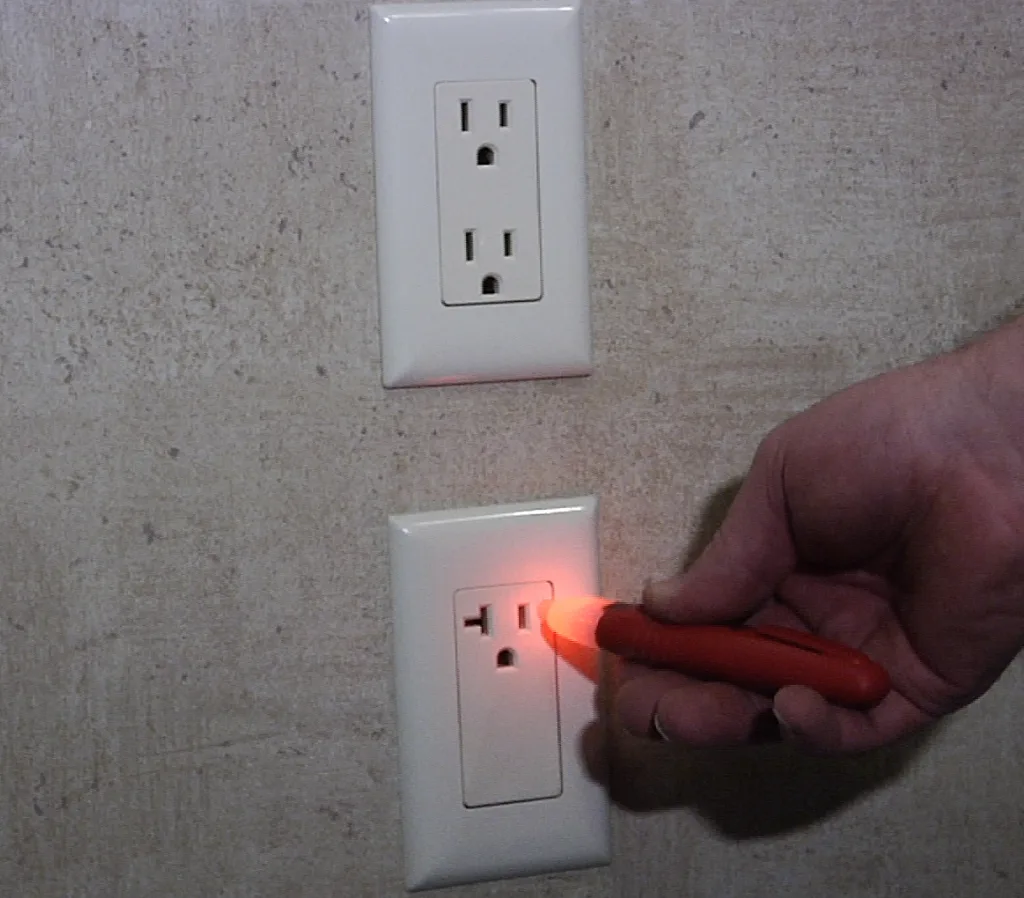
Problem #5: GFCI Outlets Keep Tripping
GFCI (Ground Fault Circuit Interrupter) outlets are the ones with the "Test" and "Reset" buttons, usually found in your kitchen, bathroom, and exterior outlet locations. They're designed to protect you from electrical shock by cutting power when they detect a ground fault (current flowing somewhere it shouldn't).
When GFCIs trip constantly, it's annoying. But it's also usually telling you something important.
Why GFCI outlets trip:
- Moisture. This is the number one cause in Florida. Humidity, rain splash on exterior outlets, or condensation inside outlet boxes causes the GFCI to detect a ground fault and trip. It's doing exactly what it's supposed to do.
- Daisy-chained outlets. In most RVs, one GFCI outlet protects several downstream outlets. A problem on any of those downstream outlets (loose wire, moisture, bad appliance) will trip the GFCI.
- Worn GFCI. GFCIs have a lifespan. The National Electrical Manufacturers Association recommends testing them monthly and replacing them every 10 years. Many RVs have original GFCIs that are well past that age.
- Faulty appliance. An appliance with a ground fault (damaged cord, internal short) will trip the GFCI every time you plug it in. Try unplugging everything from the circuit and plugging appliances back in one at a time to find the culprit.
The fix: Start by pressing the Reset button firmly. If it won't stay reset, unplug everything on that circuit and try again. If it still trips with nothing plugged in, the GFCI itself or the wiring is the problem. GFCI outlets cost $15 to $25 for the part and about $75 to $150 for professional installation.
Important safety note: never bypass a GFCI by replacing it with a standard outlet. That's a code violation and a genuine shock hazard, especially in wet areas like bathrooms and exterior locations. Is the GFCI in your RV bathroom original equipment? If so, it might be time for a replacement.
When to Call a Professional
Here's my honest breakdown of what you can handle and what you shouldn't touch:
Safe for DIY:
- Resetting breakers and GFCIs
- Checking and cleaning battery terminals
- Replacing blown fuses (with the correct amperage)
- Checking campground pedestal voltage with a monitor
- Identifying which circuit or appliance is causing a problem
Call a technician:
- Any work inside the main breaker panel
- Converter replacement or repair
- Transfer switch issues
- Wiring that shows signs of heat damage (melting, discoloration, burning smell)
- Any situation where breakers trip repeatedly and you can't identify the cause
- Shore power cord or inlet replacement
Electrical work isn't like plumbing, where a mistake means a water leak. Electrical mistakes cause fires. According to the NFPA, RV fires cause an average of $44 million in property damage annually in the United States. About 30% of those fires are electrical in origin. Those aren't numbers to take casually.
If you're dealing with any of these electrical issues and you're in the Jensen Beach, Stuart, or Palm City area, give us a call at 772-356-0328. We'll come to your location, diagnose the problem, and give you a written estimate before any work starts.