TL;DR
Florida's UV, heat, and rain cause RV roof sealant to fail 30% to 40% faster than in northern states. Inspect your roof every 3 months, reseal penetrations annually, and clean the surface at least twice a year. Small sealant repairs cost $150 to $400. Ignoring a tiny crack can lead to water damage costing $3,000 to $10,000 or more. The 20 minutes you spend on a quarterly roof check is the best investment you'll make in your RV.
Your RV roof takes more abuse than any other part of your rig. It sits out in the Florida sun 365 days a year, bakes at surface temperatures above 160 degrees in summer, gets pounded by 55+ inches of annual rainfall, and deals with salt air if you're anywhere near the coast. Here in Jensen Beach, your roof is dealing with all of those at once.
I've been repairing RV roofs across the Treasure Coast since 2016. After 10 years and 3,200+ repairs, I can tell you that roof problems cause more expensive damage than any other single issue. A $15 tube of sealant applied at the right time can prevent $5,000 in water damage. That's not an exaggeration. I've seen it happen dozens of times.
This guide covers everything Jensen Beach RV owners need to know about keeping their roof in good shape. Whether you've got a rubber EPDM roof, TPO, or fiberglass, the basics apply.
Why Florida Is Especially Hard on RV Roofs
Not all climates are created equal when it comes to roof wear. Florida is particularly tough for three reasons that work together to accelerate damage:
UV radiation. According to the EPA's UV Index data, South Florida averages a UV index of 8 to 11 during summer months. That's in the "very high" to "extreme" category. UV breaks down the chemical bonds in sealants and roof membranes, causing them to crack, chalk, and lose flexibility. Sealants that last 5 years up north might only last 3 years down here.
Heavy rainfall. Jensen Beach averages about 55 inches of rain per year. Most of that falls between June and October in intense downpours. Standing water on an RV roof (even for a few hours) finds every weakness in your sealant. If there's a hairline crack around your AC unit or vent, water will get in.
Heat cycling. Your roof surface can hit 160 degrees during the day and drop to 75 at night. That 85-degree swing happens almost daily in summer. Materials expand and contract with each cycle, which loosens fasteners and pulls sealant away from penetrations over time. Studies show that thermal cycling is responsible for roughly 25% of sealant failures in RV roofing.
The combination of these three factors means Florida RV owners need to inspect and maintain their roofs about twice as often as someone in, say, Michigan or Oregon.
The Three Main Types of RV Roofs
Before you can maintain your roof properly, you need to know what type you've got. Each material has different care requirements.
EPDM (Ethylene Propylene Diene Monomer) rubber. This is the most common type on travel trailers and mid-range motorhomes. It's a single-ply rubber membrane that's glued or mechanically attached to the plywood decking. EPDM is flexible and affordable, but it absorbs heat (making it hotter inside your RV) and can chalk and crack if not cleaned and treated regularly.
TPO (Thermoplastic Polyolefin). Increasingly popular on newer RVs, TPO is a white membrane that reflects heat better than EPDM. It's more resistant to UV and doesn't chalk as quickly. However, it can be harder to repair and requires specific cleaning products (some chemicals that are fine on EPDM will damage TPO).
Fiberglass. Found mostly on higher-end Class A motorhomes and some fifth wheels. Fiberglass is durable, easy to clean, and lasts the longest. But it can develop gel coat issues, spider cracks, and delamination, especially around stress points. Repairs require different materials than rubber roofs.
Not sure which type you have? Check your owner's manual, or climb up and take a look. EPDM is typically gray or black and feels like rubber. TPO is usually white and feels slightly stiffer. Fiberglass is hard, shiny, and smooth to the touch.
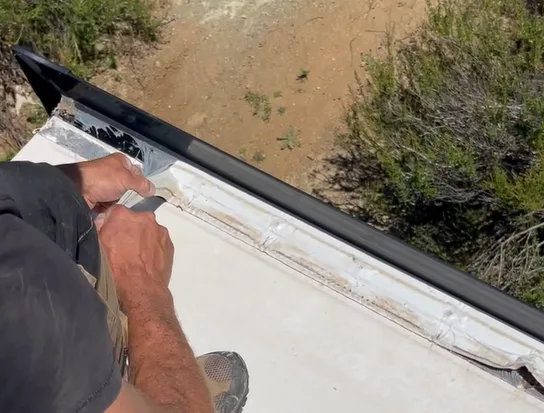
Your Quarterly Roof Inspection Checklist
I recommend Jensen Beach RV owners do a thorough roof inspection every 3 months. Here's exactly what to check. Grab a ladder, some soft-soled shoes (to avoid scuffing the membrane), and about 20 minutes.
1. Sealant around every penetration. This is where 80% of roof leaks start. Check the sealant around your AC unit(s), vents, antenna, skylights, refrigerator vent, and any other hardware that comes through the roof. You're looking for cracks, gaps, lifting edges, or spots where the sealant has pulled away from the surface. Even a hairline crack can let water in.
2. Front and rear cap seals. Where the roof membrane meets the front and rear fiberglass caps is a common leak point. Run your finger along the seam and feel for any gaps or soft spots in the sealant.
3. Membrane condition. Look for bubbles, tears, punctures, or areas where the membrane is lifting from the plywood. On EPDM, check for chalking (a white, powdery residue that means the rubber is breaking down). On TPO, look for discoloration or stiffening. On fiberglass, check for spider cracks or soft spots.
4. Standing water. After a rain, check your roof for puddles. Any area where water sits for more than a few hours is a problem spot. Standing water accelerates material breakdown and eventually finds a way inside.
5. Debris. Leaves, branches, and pine needles trap moisture against the roof surface. Clear them off regularly, especially if you park under trees.
Do you park your RV under trees between trips? If so, you'll want to inspect more often. Tree sap, falling debris, and trapped moisture from shade can cause problems faster than an RV parked in an open lot.
Annual Maintenance That Prevents Expensive Repairs
Beyond quarterly inspections, there are a few things you should do once a year (ideally in the spring before Florida's rainy season starts):
Full roof cleaning. Use a cleaner that's designed for your specific roof type. For EPDM, products like Dicor EPDM Roof Cleaner work well. For TPO, avoid petroleum-based cleaners. For fiberglass, a mild soap solution is usually enough. Scrub with a soft-bristle brush (never a stiff brush or pressure washer on rubber or TPO roofs).
Reseal all penetrations. Even if the existing sealant looks okay, I recommend applying a fresh layer of Dicor self-leveling lap sealant around all penetrations once a year. It takes about an hour and costs roughly $15 per tube (most RVs need 2 to 3 tubes). That's $30 to $45 in materials to prevent leaks that could cost thousands.
Apply a roof coating. For EPDM roofs, a protectant like Dicor Rubber Roof Protectant or 303 Aerospace Protectant helps block UV and restore flexibility. For TPO, a specific TPO roof treatment can extend the membrane's life. This step alone can add 3 to 5 years to your roof's lifespan.
Check interior ceilings for water stains. Sometimes a leak is already happening but hasn't been noticed. Look at the ceiling around light fixtures, vents, and AC units inside your RV. Brown or yellowish stains, bubbling paint, or soft spots in the ceiling panel all indicate water is getting in.
When to DIY and When to Call a Pro
Here's how I think about it. Is the repair something you can see and reach from the roof surface? Can you fix it with a tube of sealant and 30 minutes of your time? Then go for it.
Good DIY roof tasks:
- Cleaning the roof surface (2 to 3 times per year)
- Applying sealant around penetrations
- Clearing debris and checking for standing water
- Applying UV protectant or roof coating
- Small patch repairs on EPDM (kits are available for about $25)
Call a professional when:
- You find soft spots in the roof decking (the plywood is rotted underneath)
- The membrane has large tears, multiple punctures, or is peeling up
- Water damage has reached the interior (ceiling stains, mold, delamination)
- The roof is older than 15 years and showing widespread deterioration
- You're not comfortable or safe working on a ladder at roof height
Have you noticed any brown spots on your RV's interior ceiling? That's usually the first visible sign of a roof leak that's been happening for a while. Don't wait on that one. The longer water sits in the structure, the more expensive the repair gets.
What Roof Repairs Actually Cost
I believe in being upfront about pricing. Here's what you can expect for RV roof repairs in the Jensen Beach and Treasure Coast area:
- Sealant touch-up and resealing: $150 to $300. This covers resealing all penetrations and seams.
- Small patch repair (under 2 sq ft): $200 to $400. Includes the patch material, adhesive, and sealant.
- Larger patch repair (2 to 10 sq ft): $400 to $800.
- Water damage repair (limited area): $800 to $2,500. Includes removing damaged material, replacing decking if needed, and resealing.
- Full roof replacement: $2,500 to $7,000, depending on RV size and material.
The pattern is clear. Every dollar you spend on prevention saves $10 to $20 in repair costs down the road. A $45 annual resealing habit can prevent a $5,000 water damage repair.
A Simple Seasonal Schedule for Jensen Beach
Florida's weather patterns make it easy to build a maintenance schedule around the seasons. Here's what I tell my customers:
Spring (March/April): Full cleaning, reseal all penetrations, apply UV protectant. This is your most important annual maintenance window because you're prepping for the rainy season and peak UV months.
Summer (July): Quick inspection. Check sealant around AC units especially (they work hardest in summer and the thermal expansion is at its peak). Clear any debris from summer storms.
Fall (October): Post-hurricane season inspection. Check for any storm damage, clear debris, and do a thorough sealant check. Repair anything that took a hit during storm season.
Winter (January): Full inspection while the weather is mild. This is a great time for any larger repairs since temperatures are moderate and it rains less.
This four-inspection schedule takes about an hour total per year of your time. Compare that to the weeks of hassle (and thousands of dollars) that come with a preventable water damage repair. Is an hour a year worth it to protect a $50,000 to $200,000 investment?
If your RV roof hasn't been inspected recently, or you've noticed any of the warning signs mentioned above, give us a call at 772-356-0328. We'll come to your location, inspect the roof, and give you an honest assessment of what (if anything) needs to be done.