- Thermostat diagnosis, repair, replacement, and upgrades for all RV types
- Typical cost: $100 to $500 depending on the thermostat type
- Analog to digital upgrades available on site
- Wiring repair, sensor calibration, and multi-zone controller service
- Call 772-356-0328 for a free estimate
Why Your RV Thermostat Matters More Than You Think
Here's something that surprises a lot of RV owners: about 30% of the "AC isn't working" calls I get turn out to be thermostat problems, not AC problems. The compressor is fine, the fan is fine, the refrigerant is fine. But the thermostat isn't telling the AC unit to turn on, or it's telling it to turn on and off at the wrong times, or it's reading the temperature so far off that the system can't maintain comfort.
The thermostat is the brain of your climate control system. It reads the temperature inside your RV, decides when to turn the AC (or heat) on and off, and controls the fan speed. When it's working correctly, you don't think about it. When it's not, everything feels wrong.
I've seen RV owners spend hundreds of dollars at other shops getting their AC unit "repaired" when the real problem was a $100 thermostat. That's why proper diagnosis matters. I test the thermostat separately from the AC unit every single time so you're never paying for a repair you don't need.
Common RV Thermostat Problems
Inaccurate temperature readings. Your thermostat says it's 72 degrees, but the RV feels like 80. This happens when the internal temperature sensor drifts out of calibration or when the thermostat is mounted in a poor location (near a window, above a heat-generating appliance, or in direct sunlight from a skylight). In Florida, where accurate temperature control is the difference between comfort and misery, this is a problem worth solving.
Short cycling. The AC kicks on, runs for a few minutes, shuts off, then kicks on again. Over and over. This is hard on the compressor and it means your RV never quite reaches a comfortable temperature. Short cycling is usually caused by a thermostat with too narrow of a temperature differential setting, a failing sensor, or wiring that's creating intermittent connections.
Blank or unresponsive display. If you've got a digital thermostat and the screen goes blank or stops responding to button presses, it's usually a power issue. Dead batteries (on battery-powered models), a blown fuse on the 12-volt control circuit, or loose wiring behind the thermostat panel are the most common causes. Occasionally, the thermostat's internal board fails and the whole unit needs replacing.
AC won't turn on at all. Before you assume the AC unit is dead, check the thermostat. A thermostat with a bad relay, corroded wiring, or a failed control board can prevent the AC from receiving the signal to start. This is one of the first things I test during any "AC won't start" service call.
Fan runs but no cooling. Sometimes the thermostat sends the signal for the fan but not the compressor. This can happen with worn relay contacts inside the thermostat, a wiring issue that's lost the compressor signal wire, or a thermostat that's partially failed.
Types of RV Thermostats
RVs come with several different thermostat types, and knowing which one you have helps me bring the right replacement if needed.
Analog (mechanical) thermostats are the simplest type. They've got a dial or slider for temperature and a switch for mode (cool, heat, fan). They're reliable but imprecise. Temperature accuracy can be off by 3 to 5 degrees, and they don't offer programmable schedules or exact temperature readouts. Many older RVs still use these.
Digital thermostats give you an LCD display showing the current temperature, a set point you can adjust in 1-degree increments, and fan speed control. Most newer RVs (2015 and later) come with digital thermostats. They're more accurate and give you better control over your comfort. Dometic and Coleman-Mach are the most common brands.
Multi-zone controllers are found on larger RVs with two AC units. These controllers let you set different temperatures for the front and rear zones of your RV. They're more complex, with additional wiring and sometimes a central control board that communicates with both rooftop units.
Wondering which type of thermostat you have or whether an upgrade makes sense? Call me at 772-356-0328 and describe what you've got. I can usually tell you over the phone what your options are.
Upgrading from Analog to Digital
If you've got an old analog thermostat with a dial, upgrading to a digital model is one of the best comfort improvements you can make for under $300. Here's why it matters, especially in Florida.
Digital thermostats maintain temperature within 1 to 2 degrees of your set point. Analog units can swing 5 degrees or more before cycling the AC on or off. When it's 95 degrees outside and you're trying to keep the RV at 75, that 5-degree swing is the difference between comfortable and sweaty.
The upgrade is straightforward on most RVs. The new thermostat mounts in the same location as the old one, and the wiring connections are usually compatible with a few minor adaptations. I handle the full installation, test the system, and walk you through the new controls before I leave.
One thing to watch out for: not all digital thermostats are compatible with all rooftop AC units. Some newer Dometic thermostats use proprietary communication protocols that don't work with older units. I'll make sure the thermostat I install is fully compatible with your specific AC system.
Our Diagnostic Process
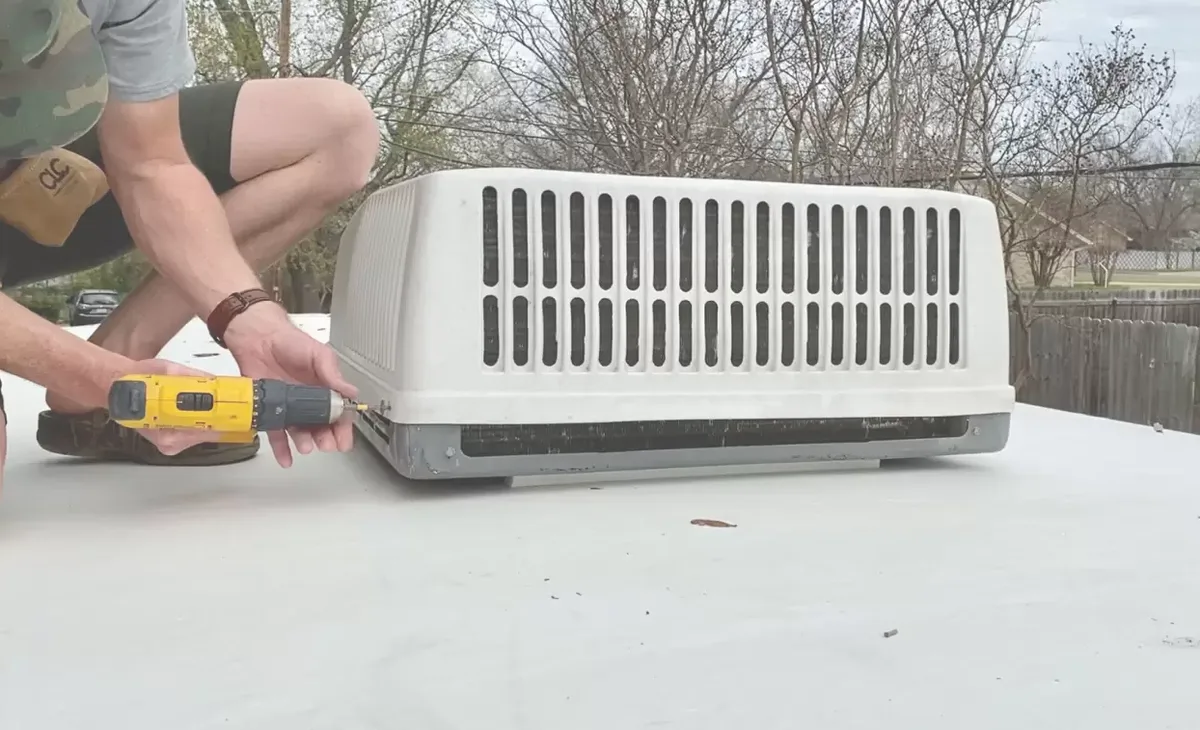
When I arrive for a thermostat service call, I don't just swap the thermostat and hope for the best. I follow a specific diagnostic process that tells me exactly where the problem is.
First, I check the thermostat's power supply. Is it getting 12 volts? Is the fuse intact? Are the connections tight? A loose ground wire can cause all kinds of erratic behavior that looks like a thermostat failure but is really just a bad connection.
Second, I test the thermostat's output signals. When you set the thermostat to cool and lower the set point below the current temperature, does it send the right signals to the AC unit? I measure this at the thermostat terminals to determine if the thermostat itself is working or not.
Third, I bypass the thermostat entirely and test the AC unit directly. If the AC works fine when bypassed, the thermostat is confirmed as the problem. If the AC doesn't work even with a bypass, there's an issue with the AC unit itself, and I'll diagnose that separately.
This process takes about 15 to 20 minutes, and it eliminates guesswork completely. You'll know exactly what's wrong and exactly what it'll cost to fix before any work starts.
When Should You Call About Your Thermostat?
Don't ignore thermostat problems just because the AC still "sort of" works. A malfunctioning thermostat forces your AC to work harder than it should, which shortens the compressor's lifespan and wastes energy.
Is your RV never quite reaching the temperature you set? That's worth a call. Is the AC cycling on and off every few minutes? Definitely worth a call. Did the thermostat display go blank or start showing strange readings? Call sooner rather than later.
Thermostat problems are among the least expensive AC issues to fix. Most repairs or replacements run $100 to $400, and the work takes an hour or less. Compare that to the $800 to $1,200 you'd spend on a compressor that failed early because a bad thermostat was overworking it.
Give me a call at 772-356-0328. I'll ask a few questions about what's happening, and we'll figure out whether the thermostat is the likely culprit. If it is, I can usually have it fixed the same day.