- Full roof leak detection, source identification, and permanent repair
- All roof types: EPDM, TPO, fiberglass, and aluminum
- Typical cost: $200 to $2,000 depending on the extent of damage
- The sooner you fix a leak, the less water damage you'll pay for later
- Call 772-356-0328 for a free estimate
Why Roof Leaks Are the Most Dangerous RV Problem
I'm not exaggerating when I say a roof leak is the single most destructive problem an RV can have. I've seen more RVs totaled by water damage than by any other cause. And the worst part is that most leaks start small, go unnoticed for weeks or months, and cause thousands of dollars in hidden damage before the owner ever sees a water stain on the ceiling.
Water doesn't just drip straight down in an RV. It travels. It follows the roof structure horizontally, soaks into the wood decking, runs along wiring channels, and pools in places you can't see. By the time you notice a brown stain on your ceiling, the water may have already rotted the substrate, delaminated the sidewall, and started growing mold behind the wall panels.
In Jensen Beach, where afternoon thunderstorms are a daily occurrence from May through October, even a tiny breach in your roof membrane can let in a surprising amount of water. The combination of heavy rain and Florida's humidity means that once water gets into the structure, it doesn't dry out easily. It just sits there, doing damage around the clock.
Where Do RV Roof Leaks Come From?
After 10 years of finding and fixing roof leaks across Martin County, I can tell you that leaks almost never happen in the middle of the roof membrane. They happen at penetrations, seams, and transitions. Here are the most common entry points.
Around the AC unit. The rooftop AC unit sits in a large rectangular opening in the roof. The gasket and sealant around this opening are constantly exposed to UV, rain, and thermal expansion. When the sealant cracks or the gasket deteriorates, water gets in right at the opening.
Vent and antenna penetrations. Every vent, antenna, and roof-mounted accessory creates a hole in the roof membrane. Each one is sealed with sealant that breaks down over time. I typically find 4 to 8 penetrations on a standard RV roof, and any one of them can become a leak point.
Front and rear cap transitions. Where the roof membrane meets the front and rear fiberglass caps is a common leak area. The sealant at these joints takes a beating from wind, vibration during travel, and thermal expansion. Cracks develop and water sneaks underneath.
Seam failures. Rubber and TPO roofs have seams where membrane panels overlap. These seams are sealed with tape or adhesive. Over time, especially in Florida's heat, the adhesive can fail and the seam can separate just enough to let water in.
Screw and rivet holes. Any fastener that goes through the roof is a potential leak point. Ladder mounts, rack mounts, solar panel brackets, and even the screws holding down edge trim can all become leak sources when the sealant around them fails.
How I Find the Leak
Finding an RV roof leak isn't always straightforward. The water stain on your ceiling might be three feet away from the actual entry point because water travels along the roof structure before finding a place to drip down. That's why I use a systematic approach rather than just looking for obvious holes.
I start by inspecting every inch of the roof surface, checking every sealant joint, seam, and penetration. I'm looking for cracked sealant, lifted edges, separated seams, and any other breach in the membrane. I press on the roof surface to check for soft spots that indicate water-saturated decking underneath.
When the entry point isn't visible from the exterior, I check from inside the RV. I look at the ceiling, walls, and any accessible areas behind panels to trace the water path back to its source. Sometimes removing a ceiling light or vent cover reveals water trails that point directly to the entry point.
Have you noticed a musty smell in your RV that you can't track down? That's often the first sign of a hidden leak and mold growing somewhere in the roof structure. Don't ignore it. Call me at 772-356-0328 and let's find the source before it gets worse.
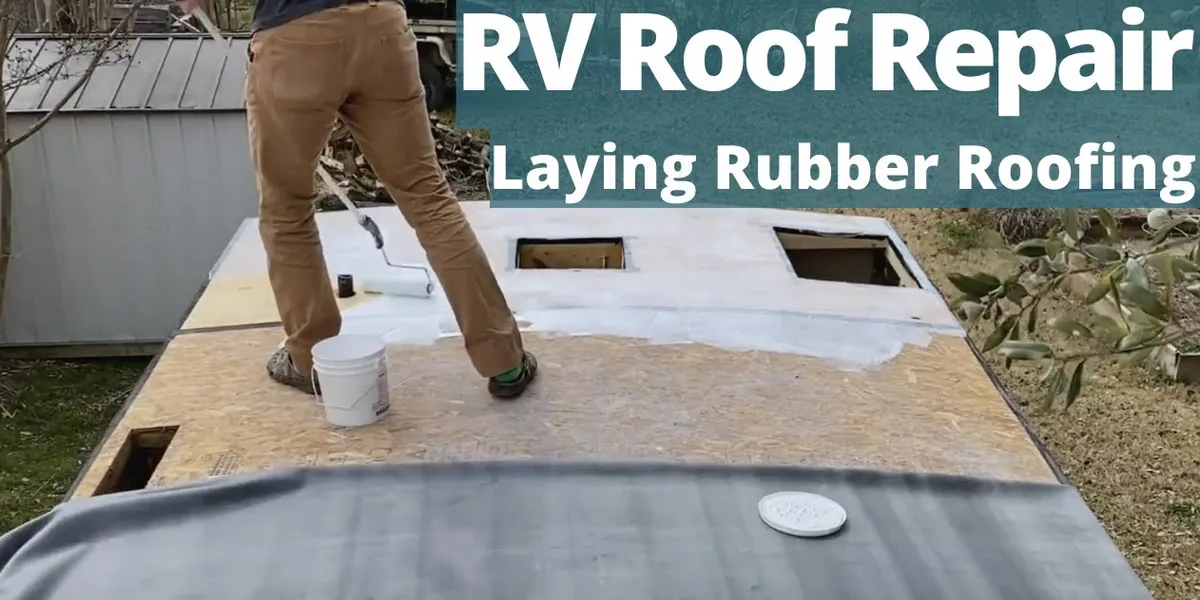
How We Fix RV Roof Leaks
The repair method depends on the leak source and your roof type. Here's what a typical repair looks like.
Sealant failures. I remove all the old, cracked sealant down to the clean surface. Then I apply new sealant that's compatible with your specific roof material. EPDM, TPO, and fiberglass each require different sealant products. Using the wrong one can actually damage the roof membrane or fail to bond properly.
Membrane damage. Small tears or punctures get patched with membrane material that matches your roof type. I clean the area thoroughly, apply primer, and bond the patch with adhesive designed for your specific membrane. Larger damaged areas might require removing and replacing a section of membrane.
Seam repairs. Failed seams get cleaned, re-primed, and re-sealed with the appropriate seam tape or adhesive. On rubber roofs, I use EPDM-specific seam tape with roller pressure to ensure a solid bond. On TPO roofs, the process is similar but with TPO-compatible materials.
Structural repair. If the leak has been going on long enough to damage the roof decking (the wood substrate under the membrane), that decking needs to be replaced before the membrane can be properly sealed. This is a bigger job, but it's the only way to fix it right. Sealing over rotten wood just traps moisture and makes things worse.
The Cost of Waiting
I want to be clear about something: every day you wait to fix a roof leak, the repair cost goes up. Water damage spreads. What starts as a $200 sealant repair can turn into a $2,000 decking replacement in a matter of weeks. And if the water reaches the walls, you're looking at delamination repair that can cost $3,000 to $5,000 or more.
Does that water stain on your ceiling seem small? It probably is, right now. But the damage behind it might already be more extensive than you'd expect. The smart move is to get it inspected and fixed while the repair is still affordable.
When to Call for Roof Leak Repair
Call immediately if you see any of the following: water stains on the ceiling or walls, soft or spongy spots on the roof surface, a musty or moldy smell inside the RV, water dripping during or after rain, bubbling or peeling wallpaper near the ceiling, or visible cracks in the roof sealant.
Even if you're not sure whether you have a leak, it's worth a quick inspection. I'd rather come out, look at your roof, and tell you everything is fine than have you wait until a small problem becomes a big one.
Call me at 772-356-0328. I can usually get to you the same day or next morning for roof leak inspections and repairs.